Advanced Orthopedic Treatment
Expert Care for Joint Pain, Bone Injuries & Musculoskeletal Disorders
Receive advanced diagnosis and treatment for a wide range of orthopedic conditions using modern, evidence-based techniques. Our goal is to reduce pain, restore function, and help you regain an active, healthy lifestyle.
Comprehensive Orthopedic Care
UNDERSTANDING THE CONDITION
What Are Orthopedic Disorders?
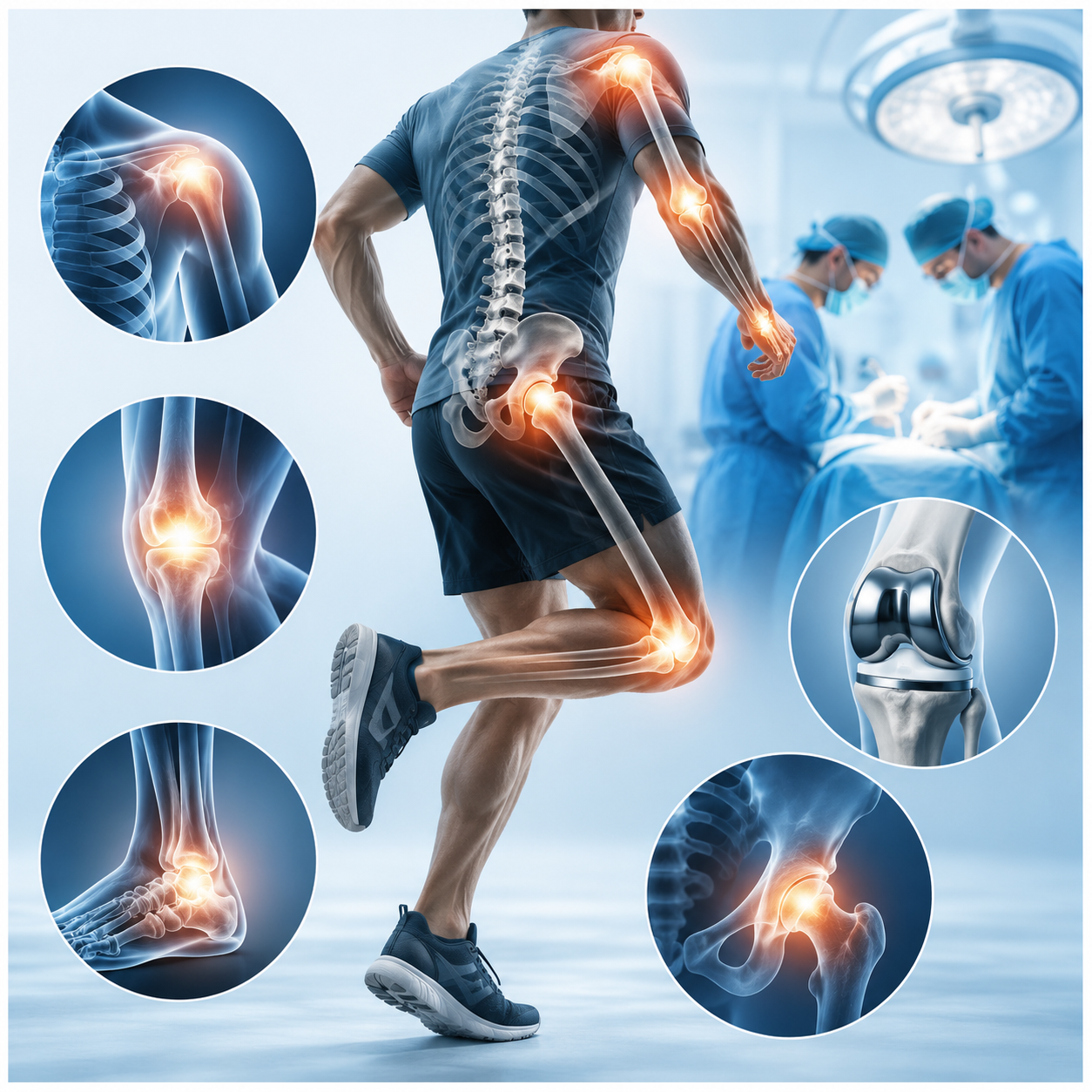
Orthopedic disorders include joint arthritis, fractures, ligament tears, tendon injuries, and bone deformities. They affect 1 in 3 adults in India and are highly treatable with modern minimally invasive techniques.
🦴 Upper vs Lower Extremity
- Upper: Shoulder, elbow, wrist pain, rotator cuff tears
- Lower: Knee, hip, ankle pain, ACL/meniscus injuries
⚠️ Common Causes
- Joint degeneration from aging and overuse
- Sports injuries, falls, and accidents
- Prolonged standing or repetitive strain
- Heavy lifting without proper technique
- Osteoporosis and bone density loss
- Obesity and metabolic disorders
Severity Levels — Understanding Your Condition
I
MILD
Minor joint discomfort and occasional stiffness after activity.
Physio & MedicationII
MODERATE
Cartilage wear with persistent pain and reduced range of motion.
Advanced TherapyIII
SEVERE
Significant joint damage with bone-on-bone contact and swelling.
Arthroscopy / LaserIV
CRITICAL
Complete joint failure with deformity and loss of function.
Joint ReplacementRECOGNISE THE SIGNS
Symptoms of Orthopedic Disorders
Don’t ignore joint or bone pain — early treatment prevents long-term disability and improves outcomes significantly.
Acute Joint Pain
Sharp, sudden pain in knee, hip, or shoulder, often triggered by movement or weight-bearing.
Radiating Limb Pain
Pain spreading from the joint down the arm or leg, with numbness or tingling.
Reduced Mobility
Stiffness and reduced range of motion, especially on waking or after prolonged sitting.
Swelling & Inflammation
Visible joint swelling, warmth, and redness indicating active inflammation or injury.
Muscle Weakness
Difficulty gripping, climbing stairs, or standing from seated due to muscle atrophy.
Gait & Balance Issues
Limping, unsteady walking, or difficulty bearing weight on an affected limb.
TRANSPARENT PRICING
Orthopedic Treatment Cost Breakdown
Note: Costs vary based on complexity, imaging (MRI/X-ray), implants, and hospital facilities. Insurance coverage applies. Prices are all-inclusive (surgeon, anaesthesia, hospital, post-op care). Call us for a personalized estimate.
HOW IT WORKS
Your Journey with OperationCost
From first call to full recovery — we handle every step.
1. Free Consult
Call or book online. Speak to a care manager in minutes.
2. Diagnosis
Advanced MRI / X-ray & specialist assessment for precise diagnosis.
3. Treatment Plan
Customised treatment plan with transparent cost estimate.
4. Surgery Day
Minimally invasive procedure with expert care and monitoring.
5. Rehabilitation
Guided physiotherapy and 90-day recovery support program.
Cashless treatment with 30+ insurance partners
- Care Health
- Star Health
- Niva Bupa
- HDFC ERGO
- Reliance Health
- Aditya Birla
- New India
- National Insurance
- + 22 more partners
COMMON QUESTIONS